 English
 English


Analysis of the 2025–2030 Dietary Guidelines for Americans: The Shift Toward an “Eat Real Food” Model
The 2025–2030 Dietary Guidelines for Americans, officially released on January 7, 2026, have created a significant impact within the medical and nutrition communities, marking one of the most meaningful “resets” in the history of U.S. nutrition policy. Rather than incremental adjustments, this edition introduces a fundamental paradigm shift: moving away from an approach centered on counting calories and individual nutrients, and returning to a simple yet powerful philosophy “Eat Real Food”.
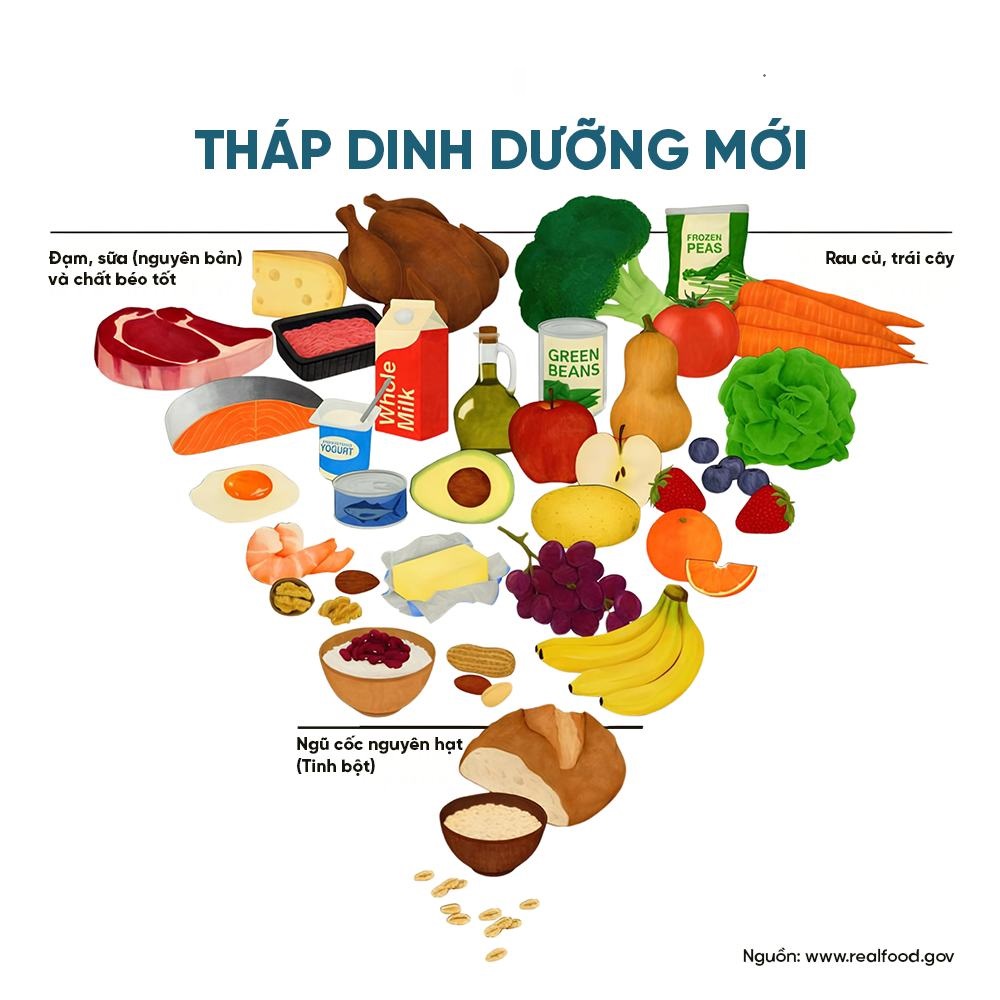
The 2025–2030 Dietary Guidelines for Americans, officially released on January 7, 2026
This shift is not merely a recommendation, but a decisive scientific response to the ongoing crisis of non-communicable chronic diseases, which are largely rooted in diets overly dependent on ultra-processed foods. By placing whole foods at the center, the new guidelines have redefined recommendations on protein, fats, and even how we perceive gut health.
Foundational Principle: A Return to “Real Food”
The most significant difference and the central message of the new guidelines lies in a simple yet fundamental principle: “Eat real food.” This is not just a slogan, but a profound shift in nutritional philosophy that prioritizes food quality and integrity above all else.
Defining “Real Food” from a Scientific Perspective
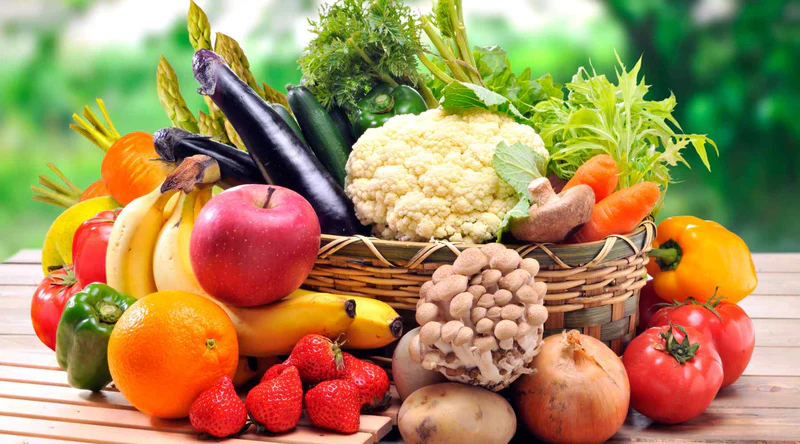
“Real food” is defined as food in its natural, whole form
The concept of “real food” in these guidelines emphasizes prioritizing foods in their whole or minimally processed forms, preserving their nutrient density and natural “food matrix.” This includes fundamental food groups such as protein sources (meat, fish, eggs), dairy products, vegetables, fruits, healthy fats, and whole grains. The goal is to consume foods in a state as close as possible to their natural form.
The Shift from “Low-Fat” to “Quality Fat
This is one of the most notable and attention-grabbing changes, going against the long-standing “fear of fat” from previous decades. The new guidelines encourage the consumption of whole milk and natural fat sources found in meat, eggs, and butter. This marks a clear departure from earlier recommendations that favored “low-fat” or “fat-free” products. While these products reduce fat content, they are often compensated with added sugars, refined carbohydrates, and additives to improve taste, ultimately compromising the integrity and nutritional density of the food.
Core recommendations and changes compared to previous guidelines
So how is this “eat real food” philosophy applied in practice? The answer lies in specific, quantitative recommendations for each food group, with breakthrough highlights based on the latest scientific evidence regarding the role of nutrition in disease prevention.
Prioritizing protein in every meal: The importance of muscle mass
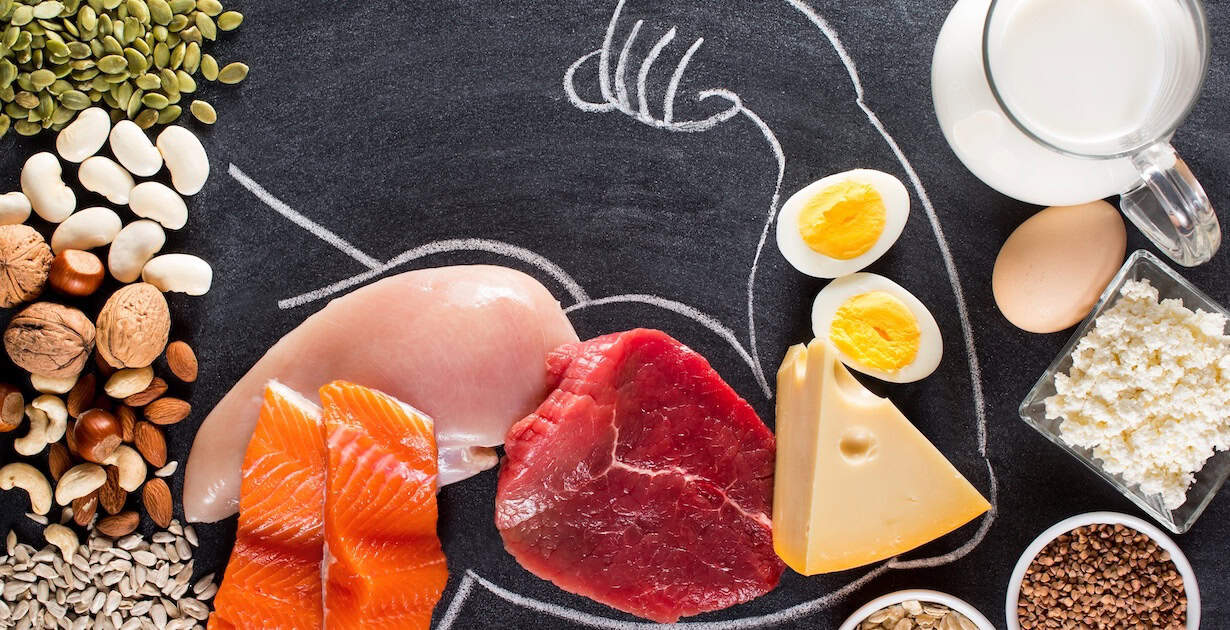
Protein có vai trò quan trọng trong việc dự phòng mất khối cơ
One of the strongest recommendations is to consume a substantial amount of protein, approximately 1.2–1.6 g/kg of body weight per day. This figure is significantly higher than previous minimum recommendations (1–1.2 g/kg/day), reflecting the growing recognition of protein’s role not only in building but also in maintaining muscle mass. The scientific basis for this recommendation is to counteract age-related muscle loss (sarcopenia)—a major risk factor for frailty and reduced quality of life in older adults. At the same time, protein helps boost metabolism and promotes satiety, effectively supporting weight management and blood glucose control.
Perspective on ultra-processed foods and added sugars
The new guidelines take a very clear stance on ultra-processed foods (UPFs) and added sugars. UPFs are characterized by containing industrial ingredients not typically found in home kitchens, such as emulsifiers, artificial flavorings, and sweeteners. The guidelines emphasize that no amount of added sugar is considered beneficial for health, and a meal should not contain more than 10 grams of added sugar. It is recommended to minimize foods high in refined carbohydrates, industrial fats, salt, and chemical additives. This reflects a direct acknowledgment that the rise in chronic diseases such as obesity, type 2 diabetes, and cardiovascular disease is closely linked to the increasing consumption of UPFs in modern diets.
Gut health: A newly recognized pillar
For the first time, “gut health” has been established as a distinct focus area, recognizing the central role of the microbiome in overall health. The guidelines highlight the link between a diet rich in fiber from vegetables and whole grains, along with fermented foods (such as kefir, kimchi, and yogurt), and the maintenance of a diverse and healthy gut microbiota. A balanced microbiome not only supports digestion but also has profound effects on immune function and the risk of chronic diseases.
Practical implications and potential impact of the new guidelines
The changes proposed in the 2025–2030 U.S. Dietary Guidelines go beyond individual meal advice. When implemented at a national scale, they have the potential to create far-reaching impacts, reshaping how we approach healthcare, food production, and the role of professionals in safeguarding public health.
A paradigm shift: From treatment-based medicine to lifestyle-based preventive care
Lifestyle changes help prevent chronic diseases
The most fundamental and transformative aspect of the new guidelines is the strong shift from a healthcare system focused on treating symptoms with pharmaceutical interventions to a foundation of lifestyle-based preventive medicine. The guidelines acknowledge a scientific reality that is often overlooked: most chronic diseases are not primarily driven by genetics, but are largely predictable outcomes of poor dietary patterns and sedentary lifestyles.
By placing “real food” at the center, the guidelines emphasize the role of nutrition as a first-line, powerful, and effective intervention to prevent disease at its root. Instead of intervening only when clinical indicators reflect declining health, this approach focuses on building a strong internal foundation for health, enabling the body to recover, enhance immunity, and maintain natural balance. This represents a fundamental shift in thinking, where the concept of “food as medicine” is no longer just a metaphor, but a scientific principle that should be actively applied.
Challenges in implementation and the evolving role of nutrition professionals
Implementing these changes on a large scale will face significant challenges. The U.S. population, long accustomed to and dependent on the convenience, low cost, and “engineered” addictive flavors of ultra-processed foods, will require sustained education and support to transition toward a dietary pattern that demands more time for preparation and greater cooking skills. This challenge lies not only in individual habits but also in the structure of the current food system, which heavily favors industrialized products.
In this context, the role of nutritionists, healthcare professionals, and educators becomes more critical than ever. Their responsibility goes beyond simply providing recommendations—they must act as “health coaches,” guiding and supporting communities throughout this transition. Specifically:
- Education and awareness building: Help the public clearly understand the difference between “empty calories” from ultra-processed foods and the “nutrient density” of real foods.
- Practical skill guidance: Teach how to read and interpret food labels, plan meals, and apply simple cooking techniques that preserve maximum nutritional value.
- Personalized approaches: Tailor general recommendations to specific populations (older adults with higher protein needs, individuals with underlying conditions requiring lower-carb diets, pregnant women needing increased iron and folate, etc.
This is a call to action—not only for individuals but for the entire system—to collectively build a new culture around food and health.
Conclusion
The 2025–2030 Dietary Guidelines are not merely an update, but a strong statement acknowledging the failure of the reductionist nutrition approach of the past. The shift toward the “eat real food” model represents a necessary and evidence-based step forward, recognizing that health does not come from isolated nutrients, but from the complex synergy within whole food matrices.
By encouraging a diet rich in high-quality protein and natural fats, while taking a firm stance against ultra-processed foods, these guidelines provide a clear pathway to address the burden of chronic disease. Although challenges remain in large-scale implementation, this marks a meaningful return to fundamental nutritional principles. It calls for change not only in individual eating habits but also in how healthcare systems, education, and the food industry operate—laying the foundation for a future where nutrition is restored to its rightful role as a cornerstone of preventive medicine.
References:
|
Maybe you are interested
Prevention of digestive disorders in children
Digestive disorders are a common disease in children, affecting the child's digestive system, causing symptoms such as diarrhea, constipation, vomiting,...
See more
The significance of the immune system and 24-hour Colostrum
Children are extremely sensitive to pathogens due to their immature immune systems. To fill the "immune gap" during this period,...
See more
Immune boost for the elderly with nutrition
The immune system plays an essential role in protecting the body against pathogens, especially in the elderly, whose immune function...
See more