 English
 English


Frailty syndrome in older adults and nutritional interventions

Frailty syndrome is common in adults over 75
Unintentional weight loss, persistent fatigue, and slowed mobility in older adults are often overlooked as mere “signs of aging.” However, from a geriatric medicine perspective, these may indicate a clinical condition known as frailty syndrome. This condition is characterized by a decline in physiological reserves and increased vulnerability to stressors, significantly elevating the risk of falls, hospitalization, and mortality. Unlike normal aging, frailty is a pathological process in which malnutrition and muscle loss (sarcopenia) play central roles. This article analyzes the underlying pathophysiological mechanisms of frailty syndrome and presents a comprehensive, evidence-based nutritional intervention strategy aimed at breaking this vicious cycle.
Pathophysiology of frailty syndrome
To develop an effective intervention strategy, it is essential to first analyze the core pathophysiological mechanisms and their complex interactions that lead to a state of decline in older adults.
Definition and diagnostic criteria of frailty syndrome
Frailty syndrome is a medical condition characterized by reduced strength, endurance, and physiological function, resulting in increased vulnerability to dependency or death. One of the most widely recognized models for diagnosing frailty is the Fried Frailty Phenotype, which defines frailty as the presence of at least three out of five criteria:
- Unintentional weight loss: Loss of more than 4.5 kg or >5% of body weight over the past year.
- Exhaustion: Self-reported persistent fatigue or feeling tired most of the time.
- Weakness: Reduced handgrip strength (measured by a dynamometer), below standardized thresholds adjusted for sex and body mass index (BMI).
- Slow walking speed: walking longer than standard thresholds to walk a short distance (e.g., 4.5 meters), adjusted for age and height.
- Low physical activity: Very low weekly energy expenditure from physical activities.
Stages and age groups at risk of frailty syndrome
Frailty syndrome does not emerge at a specific age but is considered a geriatric syndrome, meaning its risk increases exponentially with advancing age and the accumulation of health-related conditions. However, there are certain milestones and life stages during which this risk becomes particularly pronounced.
- By Age:
Epidemiological studies show a clear stratification of risk across age groups. Although frailty may occur earlier, its prevalence increases significantly after the age of 75. The highest rates are observed in individuals over 85, reaching up to 25–50% depending on the study population. This trend reflects the natural decline in the body’s physiological reserve systems with advancing age. - By Stages and “Precipitating Events”:
Beyond chronological age, frailty syndrome often becomes more apparent or progresses more rapidly following transitional periods or “stressful events” that rapidly deplete the body’s already limited reserves. These precipitating events include:
– Post-hospitalization or post-surgical period: This is one of the leading risk factors. Even short periods of bed rest can lead to rapid losses in muscle mass and strength. In addition, systemic inflammatory responses and metabolic stress during this phase accelerate protein catabolism, driving the individual more quickly toward frailty.
– During chronic diseases or acute exacerbations: Conditions such as heart failure, chronic obstructive pulmonary disease (COPD), chronic kidney disease, or poorly controlled diabetes are associated with persistent low-grade inflammation. This inflammatory state keeps the body in a continuous cycle of energy and protein depletion, gradually leading to physical decline and frailty.
– Following psychosocial events: Psychological and social factors exert direct biological effects. The loss of a spouse, a diagnosis of depression, or social isolation often results in reduced appetite, decreased physical activity, and neglect of self-care. These factors directly impact nutritional and physical status, creating a subtle yet powerful pathway toward frailty syndrome.
Consequences of frailty syndrome
Frailty syndrome represents a self-perpetuating and progressively worsening cycle. This process often begins with malnutrition (due to reduced appetite or illness) and chronic low-grade inflammation. These two factors drive the development of muscle loss (sarcopenia), leading to reduced strength and a lower basal metabolic rate. As strength and energy decline, physical activity levels decrease accordingly, which further exacerbates muscle loss and loss of appetite, completing a vicious cycle and pushing the individual into a more severe state of deterioration..
Nutritional interventions for the management and prevention of frailty syndrome
Since malnutrition and muscle loss lie at the core of the cycle leading to frailty syndrome, nutritional intervention is the most critical and effective strategy to disrupt this pathological process.
Enhancing energy and high-quality protein intake: a key strategy against catabolism
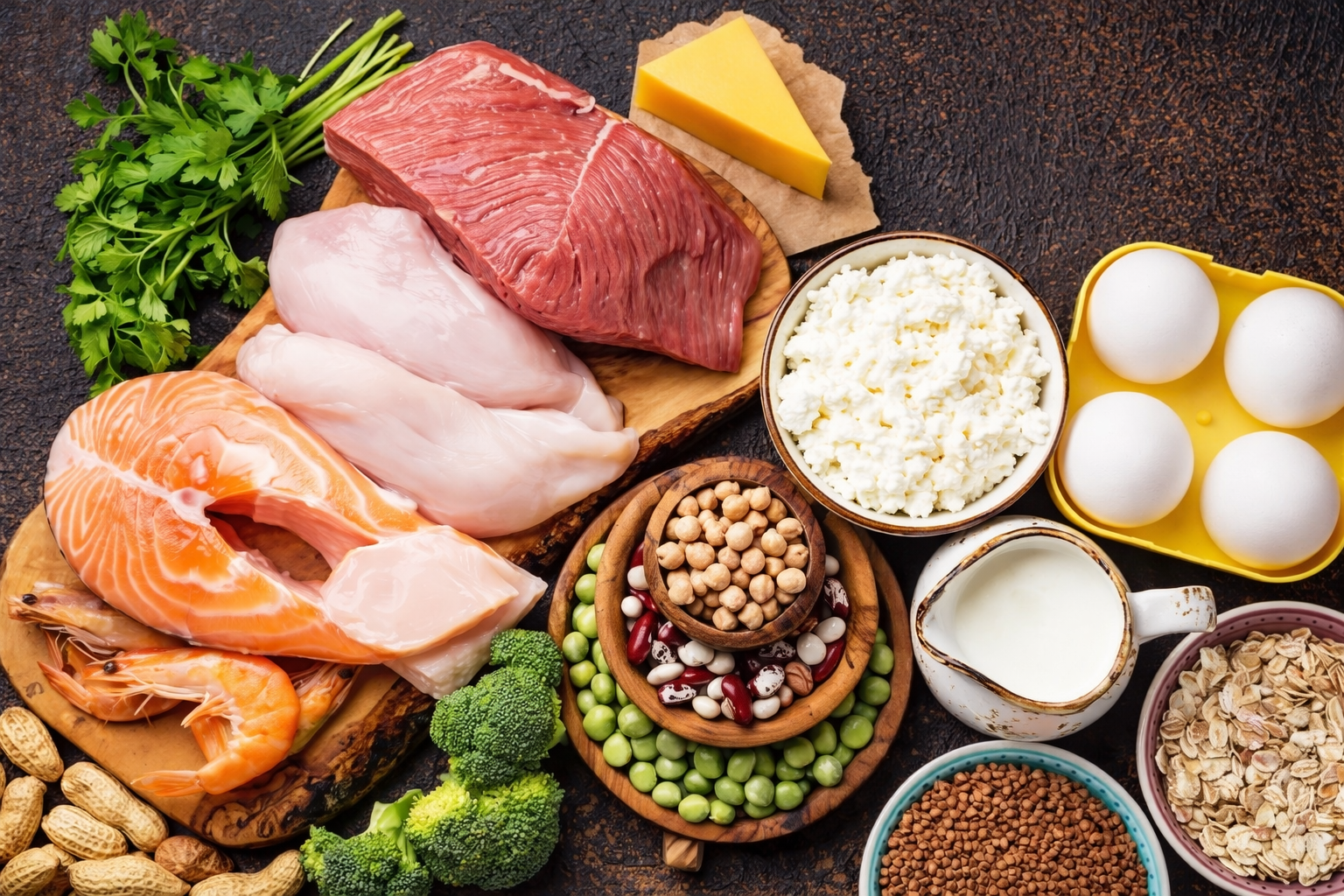
Increasing energy and protein intake to counteract catabolism
Nutritional intervention in frailty syndrome should be regarded as a medical therapy, with the primary goal of counteracting catabolism and restoring the body’s depleted reserves. To achieve this, a nutrient-dense diet is essential, delivering high energy and nutrient content within a small food volume, making it suitable for individuals with reduced appetite. Protein plays a central role in this approach. Due to “anabolic resistance,” the muscles of frail older adults no longer respond efficiently to growth signals. To overcome this barrier, international clinical guidelines, such as those from the PROT-AGE expert group, recommend a significantly higher protein intake than for younger individuals, at approximately 1.2–1.5 g/kg of body weight per day.
The selection of protein sources is equally important. Proteins with high biological value and rapid absorption rates, such as Whey protein, are particularly preferred. Whey protein is rich in leucine, a branched-chain amino acid (BCAA) that acts as a key “trigger,” directly activating the mTORC1 signaling pathway to initiate muscle protein synthesis. Providing an adequate amount of leucine after meals is an effective strategy to maximize the anabolic response in older adults.
Role of specialized micronutrients
In addition to energy and protein, a range of micronutrients plays a synergistic and indispensable role in restoring function and improving overall health.
- Vitamin D: Commonly recognized for its role in bone health, vitamin D is in fact a steroid hormone that directly affects muscle function. Muscle cells contain specific vitamin D receptors (VDRs). Adequate vitamin D intake improves muscle contraction, enhances strength, and has been shown in multiple studies to significantly reduce the risk of falls in frail older adults. Vitamin D deficiency is extremely common in this population due to limited sun exposure and reduced skin synthesis capacity.
- B Vitamins (particularly B12, B6, and folate): The pathophysiology of frailty syndrome is closely associated with chronic inflammation and increased oxidative stress. These antioxidants act as a “defense system,” neutralizing harmful free radicals, protecting cell membranes from damage, and reducing the overall inflammatory burden. This contributes to a more favorable biochemical environment for recovery.
- Antioxidants (Vitamin C, E, Selenium): The pathophysiology of frailty syndrome is closely associated with chronic inflammation and increased oxidative stress. These antioxidants act as a “defense system,” neutralizing harmful free radicals, protecting cell membranes from damage, and reducing the overall inflammatory burden. This contributes to a more favorable biochemical environment for recovery.
Clinical practice shows that breaking the frailty cycle requires a sufficiently robust nutritional intervention to meet increased energy and protein demands. However, this is nearly impossible to achieve through regular meals in older adults experiencing loss of appetite and exhaustion. In such cases, specialized Medical Nutrition solutions, with high energy density and optimized biological value, become a key therapeutic intervention.
Researched and developed by Nutricare in collaboration with the Nutricare Medical Nutrition Institute – USA (NMNI-USA), Nutricare Gold supplements and ready-to-drink Nutricare Gold nutritional milk (collectively referred to as “Nutricare Gold”) are designed as a comprehensive nutritional solution that directly targets the key components of the frailty cycle.
– Nutricare Gold provides a high-energy source along with high-quality protein (including Whey protein from the U.S.). This protein is easily absorbed and rich in leucine, delivering essential amino acids efficiently to stimulate muscle protein synthesis and regeneration, forming the foundation for restoring strength and mobility.
– To address micronutrient deficiencies, Nutricare Gold is fortified with 56 essential nutrients. Among these, vitamin D supports muscle function, B vitamins are involved in energy metabolism to reduce fatigue, and the antioxidant system (A, C, E & selenium) counteracts oxidative stress and chronic inflammation.
With this approach, Nutricare Gold is not merely a supplementary meal, but an effective nutritional intervention that enables older adults with frailty to address deficiencies, restore physical health, and improve quality of life.
Adjunct interventions: From physical activity to psychological support
Nutrition is the foundation, but effective management of frailty syndrome requires integration with other interventions to improve both physical and psychological function.
The importance of personalized resistance exercise
Even with optimal nutrition, it remains only the “building material”; for these nutrients to be converted into muscle mass and bone density, the body requires strong mechanical signals from physical activity. Resistance exercises (such as light weightlifting, resistance band training, or bodyweight exercises like squats and wall push-ups) play a key role:
- Stimulating muscle protein synthesis: Physical activity creates controlled micro-damage in muscle fibers, which activates the mTOR signaling pathway, the body’s “protein synthesis factory”, thereby maximizing the utilization of dietary protein intake.
- Promoting bone formation: When muscles contract, they exert pulling forces on bones. According to Wolff’s Law, this mechanical loading stimulates osteoblast activity, increasing bone mineral density and strengthening bones from within.
- Personalization is essential: In older adults, the boundary between effective training and injury is very narrow. A program tailored by a professional ensures:
– Compatibility with joint degeneration or underlying conditions (cardiovascular disease, hypertension).
– Focus on key muscle groups involved in balance, thereby directly reducing the risk of falls.
Managing psychosocial factors: The key to breaking the frailty cycle

Managing psychosocial factors to limit the impact of frailty in older adults
A fracture prevention strategy will be ineffective if the patient’s psychological state is overlooked. Conditions such as depression, anxiety, and social isolation are not merely emotional concerns, they directly affect physiology through:
- Anorexia of Aging: Loneliness and depression alter the balance of hunger and satiety hormones, leading to reduced appetite in older adults. When intake becomes insufficient, the body initiates catabolism – breaking down muscle protein to sustain vital functions—resulting in rapid muscle loss.
- Fear of Falling: Individuals who have experienced falls or have underlying anxiety often restrict their movement. This lack of activity leads to a state of “functional decline” accelerating muscle weakness and, paradoxically, increasing the actual risk of falls.
- Necessary Interventions:
– Screening: Use psychological assessment tools (such as GDS – Geriatric Depression Scale) to detect early signs of instability.
– ocial engagement: Encourage participation in health clubs or family meals. Social interaction has been shown to significantly improve adherence to nutritional interventions and exercise motivation, enabling older adults to maintain independent living and quality of life over the long term.
Conclusion
Frailty syndrome is not an inevitable part of aging, but a medical condition that can and should be addressed. Early recognition of warning signs and disruption of the pathological cycle are essential to preserving independence and quality of life in older adults. Nutritional intervention remains the central and most effective foundation. A proactive nutrition strategy, focused on adequate energy intake, high-quality protein, and essential micronutrients, particularly through Medical Nutrition solutions when necessary, combined with an appropriate exercise program, represents a scientific and comprehensive approach. This is ultimately an investment in restoring strength, vitality, and quality of life for older adults.
References:
|
Maybe you are interested
F100 Formula – Growth and protection for malnourished children according to recommendations of the World Health Organization (WHO)
Recommended by the World Health Organization (WHO) and the Ministry of Health for use in malnourished children, F100 formula helps...
See more
Tips for healthy diet during cancer treatment with radiation therapy
Radiation therapy is an effective cancer treatment method, but it also greatly affects the patient's health due to the side...
See more
Nutrition for the elderly after surgery
After surgery, the elderly often have difficulty providing adequate nutrition for their bodies due to problems such as loss of...
See more