 English
 English


Guidelines for calcium supplementation in the elderly to prevent osteoporosis
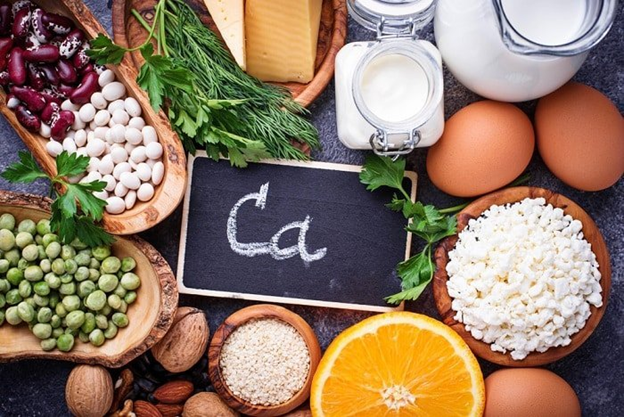
Calcium is the foundation of strong bone
Calcium is a fundamental mineral for maintaining a strong skeletal system, acting as the building block of the body’s entire structure. However, calcium supplementation is not as simple as “eating more calcium-rich foods.” In older adults, this process becomes more complex due to natural physiological changes that reduce absorption efficiency and accelerate bone loss. This creates an urgent need for a smart, science-based calcium supplementation strategy, one that focuses not only on quantity, but also on optimizing quality and bioavailability.
What is osteoporosis? Why do older adults need calcium supplementation?
To develop an effective prevention strategy, we must first answer two fundamental questions: “What is osteoporosis?” and “Why does calcium supplementation become almost essential as the body ages”.
What Is Osteoporosis?
Osteoporosis is a metabolic bone disorder characterized by a reduction in bone mineral density (making bones more porous) and deterioration of the internal microarchitecture (making bones weaker). This process causes bones to become fragile and more prone to fractures, even from minor impacts or, in some cases, without any obvious trauma.
The disease often progresses silently over many years, with no noticeable symptoms until the first fracture occurs, commonly at high-risk sites such as the spine, wrist, and hip.
The irreplaceable role of calcium in bone health
Approximately 99% of the body’s calcium is stored in bones in the form of hydroxyapatite, providing strength and structural integrity to the skeleton. The body is constantly undergoing bone turnover, a physiological process in which osteoclasts break down old bone tissue while osteoblasts build new bone. When dietary calcium intake is insufficient to meet the body’s needs, the body prioritizes maintaining stable blood calcium levels, a critical requirement for nerve and muscle function, by increasing the mobilization of calcium from bones. Over time, this continuous “withdrawal” leads to progressive bone loss and increases the risk of osteoporosis.
Physiological changes increase the risk of calcium deficiency

Aging disrupts the body’s calcium balance
The natural aging process leads to a series of physiological changes that impair the body’s calcium balance. The ability to absorb calcium in the intestine declines significantly, partly due to reduced production of vitamin D receptors in the gut and decreased gastric acid secretion.
At the same time, hormonal decline, particularly estrogen in postmenopausal women and testosterone in men enhances the activity of osteoclasts (bone-resorbing cells), accelerating the rate of bone loss.
Finally, the skin’s ability to synthesize vitamin D under sunlight exposure also diminishes, directly affecting calcium absorption and creating a vicious cycle of deficiency.
The science of calcium types and bioavailability
Meeting calcium requirements is not just about quantity. The effectiveness of supplementation largely depends on the form of calcium and the presence of synergistic nutrients.
Bioavailability: The key factor determining calcium effectiveness
Bioavailability is a scientific term that refers to the percentage of a nutrient that is actually absorbed and utilized by the body.
For calcium, this factor depends on multiple variables, including the type of calcium salt, its solubility, the pH level of the stomach, and the presence of other substances in the same meal (for example, phytates and oxalates in plant-based foods can inhibit calcium absorption).
Comparison between organic and inorganic calcium
In nutrition, calcium is typically classified into two main groups with different absorption capacities…
– Inorganic calcium has a high elemental calcium content but low solubility. It requires a strongly acidic stomach environment to be properly broken down and absorbed. This can be a disadvantage for older adults, who often experience reduced gastric acid secretion. Additionally, this form may cause side effects such as bloating or constipation.
– In contrast, organic calcium, such as Calcium Citrate or Calcium Gluconate (a naturally occurring form found in milk), has better solubility, is less dependent on stomach acid, and is generally better tolerated.
The essential synergistic duo: Vitamin D3 and Vitamin K2
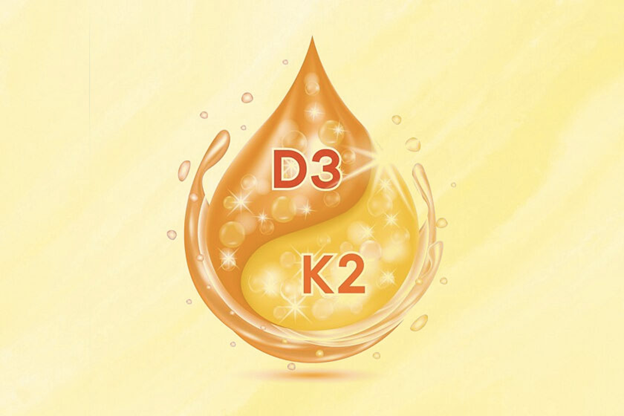
The Vitamin D3 and K2 duo for stronger bones
Scientific evidence shows that supplementing calcium alone is an incomplete strategy and may carry potential risks. The effectiveness and safety of calcium depend on the synergy of two essential fat-soluble vitamins:
– Vitamin D3: Functions like a hormone, acting as a “carrier” that directly stimulates the synthesis of calcium-transport proteins in the intestinal lining, thereby enhancing calcium absorption into the bloodstream. Without sufficient Vitamin D3, the body can absorb only about 10–15% of dietary calcium.
– Vitamin K2 (MK-7 form): Acts as an intelligent “traffic controller.” It activates osteocalcin, a protein responsible for binding calcium from the blood into the bone matrix. At the same time, it activates Matrix Gla Protein (MGP), which helps prevent calcium deposition in soft tissues and blood vessel walls, thereby reducing the risk of atherosclerosis.
Therefore, an effective calcium supplementation strategy must ensure adequate intake of both Vitamin D3 and Vitamin K2.
The role of physical activity in bone and joint health
For older adults, nutrition alone is not sufficient to prevent osteoporosis. Appropriate physical activity acts as an essential “catalyst,” enabling the body to utilize nutritional “building materials” more effectively. When engaging in suitable exercises such as walking, tai chi, or light resistance training, mechanical forces applied to the skeleton send signals that stimulate bone-forming cells to become more active.
This process essentially “instructs” the body to use calcium, vitamin D, and protein that have been supplied to build and strengthen bone structure. Moreover, regular physical activity helps enhance muscle strength, improve joint flexibility, and maintain balance. A strong musculoskeletal system not only slows the progression of osteoporosis but also serves as a solid “shield” against falls, thereby preserving independence and quality of life in older adults.
Calcium supplementation recommendations for older adults
Based on these scientific foundations, leading global medical and nutrition organizations have issued specific recommendations, emphasizing the advantages of certain natural food sources.
Recommended calcium intake for older adults
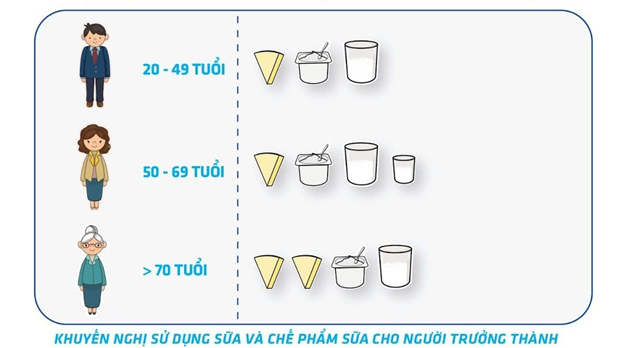
Recommendations on milk and dairy consumption for adults
To maintain calcium balance and protect bone health, major health organizations provide clear recommendations.
Specifically, the National Institute of Nutrition of Vietnam recommends that individuals over the age of 50 consume 1,000 mg of calcium per day. This aligns with the guidance of the International Osteoporosis Foundation (IOF), which suggests an intake of 1,000–1,200 mg/day for this age group to compensate for reduced absorption and increased bone loss.
However, calcium supplementation must be carried out scientifically and should not exceed recommended levels without proper guidance. Excessive calcium intake, particularly from supplements, may lead to hypercalcemia and cause various adverse health effects. The upper safe limit for calcium intake in older adults is generally set at 2,000–2,500 mg/day.
When this threshold is exceeded, unabsorbed calcium may result in constipation, bloating, and interfere with the absorption of other essential minerals such as iron and zinc. More seriously, elevated calcium levels in the blood may increase the risk of kidney stones and calcification of soft tissues, including blood vessel walls, thereby raising the risk of cardiovascular diseases. Therefore, calcium supplementation, especially through high-dose products should always be undertaken under the guidance of a physician or nutrition specialist to ensure both safety and effectiveness.
Why should calcium from milk and dairy products be prioritized?
Among various food sources, milk and dairy products are considered the “gold standard” for calcium intake for several scientific reasons.
– First, calcium in milk has very high bioavailability. It is an organic form of calcium, existing in a complex with protein (casein phosphopeptides – CPPs), which enhances its solubility and absorption in the intestinal wall.
– Second, milk naturally provides a synergistic combination of nutrients, including high-quality protein, phosphorus, and magnesium—key components involved in building and maintaining bone structure.
– Finally, due to their soft and liquid forms, milk, yogurt, and cheese are especially suitable for older adults who may have dental issues or difficulty chewing and swallowing.
Recommended dairy servings for older adults
To achieve the recommended intake of 1,000–1,200 mg of calcium per day, older adults should aim to consume approximately three servings of milk and dairy products daily.
– One serving is defined as: one glass of milk (about 100 ml), one cup of yogurt (about 100 g), or one slice of cheese (about 15 g).
– Flexibly incorporating these products into main meals and snacks can help diversify the diet and make it easier to meet nutritional goals.
Consuming around three servings of dairy per day is a fundamental strategy for meeting calcium needs. However, for older adults seeking a more comprehensive solution that simultaneously supports the muscle–bone–joint system, specialized medical nutrition formulas are considered a more targeted and science-based approach.
Developed by Nutricare and the Nutricare Medical Nutrition Institute – USA (NMNI-USA), Nutricare Bone dietary supplement (collectively referred to as “Nutricare Bone”) is formulated based on this comprehensive approach. The product provides a complete nutrient system for musculoskeletal health, featuring a high calcium content combined with Vitamin D3 and K2 to optimize bone health. At the same time, the formula is enriched with glucosamine to support joint flexibility and help reduce discomfort. Easily absorbed whey protein and plant-based protein supply essential amino acids, contributing to the maintenance of muscle strength.
With more than 50 essential nutrients, consuming two servings of Nutricare Bone daily becomes a convenient and science-based nutritional solution, helping older adults not only meet their calcium needs but also receive comprehensive support for muscles and joints—promoting an active and fulfilling lifestyle.
Conclusion
Preventing osteoporosis in older adults is not simply about increasing calcium intake, but rather a targeted scientific intervention that requires precision. Instead of focusing solely on quantity, the most effective strategy lies in optimizing the body’s ability to absorb and utilize calcium to adapt to the physiological changes of aging.
This can be achieved by prioritizing highly bioavailable calcium sources, such as milk and dairy products, and more importantly, ensuring the synergistic role of key micronutrients like Vitamin D3 and Vitamin K2. This represents the most intelligent and sustainable approach to proactively protect bone health and effectively prevent osteoporosis.
References:
|
Maybe you are interested
Practical guideline on obesity care in patients with gastrointestinal and liver diseases
Patients with chronic gastrointestinal disease such as inflammatory bowel disease (IBD), irritable bowel syndrome (IBS), celiac disease, gastroesophageal reflux disease...
See more
Anorexia in different ages of children
Anorexia is a common problem in children, causing a lot of worry for parents. This condition not only affects a...
See more
Cachexia in cancer patients
Cachexia has a negative impact on the patient's ability to fight infection and to withstand chemotherapy or radiation treatments, thereby...
See more